New Delhi: Biomedical research received a renewed push as the Department of Health Research (DHR) hosted the Medical Colleges Research Connect 2026, with a ₹4,800 crore allocation to DHR reinforcing the Government of India’s commitment to strengthening India’s Biomedical Research ecosystem.
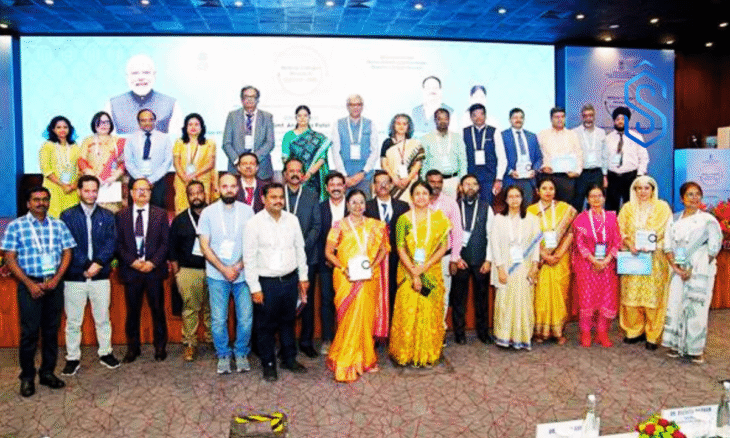
Union Minister of State for Health & Family Welfare and Chemicals & Fertilizers, Anupriya Patel, inaugurated the Department of Health Research’s Medical Colleges Research Connect 2026 at Sushma Swaraj Bhawan, New Delhi.
The event underscored the government’s sustained focus on enhancing Biomedical Research capacity across medical institutions nationwide.
National Platform for Strengthening Biomedical Research
The two-day national conference, held on February 26–27, 2026, serves as a key platform bringing together over 100 medical colleges from across India.
These institutions host Medical Colleges Research Units (MRUs) established under the Central Sector Umbrella Scheme aimed at creating infrastructure for the promotion of health research in India, thereby advancing Biomedical Research standards at the institutional level.
Also Read: Cabinet Approves Phase III of Biomedical Research Career Programme with INR 1,500 Cr Investment
The event was also graced by Abhijat Chandrakant Sheth, Chairman of the National Medical Commission, as Guest of Honour.
Medical Colleges Research Connect 2026 brings together more than 100 multidisciplinary research units established in medical colleges across the country, with a focused agenda to strengthen India’s health research ecosystem and elevate the quality of Biomedical Research conducted at the grassroots level.
Government Reaffirms Commitment to Research
In her address, the Chief Guest reaffirmed the commitment of the Government of India towards promotion of health research in India.
She appreciated the research work being done in the medical colleges and enjoined upon the faculty to raise the standards of medical research to facilitate the progress of India in the direction of Viksit Bharat, with a clear emphasis on expanding and deepening Biomedical Research capabilities.
The ₹4,800 crore allocation to DHR further reinforces the government’s resolve to promote infrastructure development, capacity building, and innovation in Biomedical Research, particularly within medical colleges that play a critical role in translating research into clinical impact.
Also Read: Nafithromycin: India’s First Home-Grown Antibiotic Marks Breakthrough in Biotech Innovation
Interactive Sessions, Workshops, and Research Presentations
Over the two days, representatives from participating institutions are presenting reports on their research activities and outcomes.
The conference includes interactive lectures, workshops, and symposia on topics such as writing improved grant proposals, training opportunities, and technical aspects of Biomedical Research.
These sessions are designed to facilitate knowledge exchange and mutual learning among researchers, enabling them to strengthen institutional research frameworks and enhance their ability to conduct high-quality Biomedical Research.
The Medical Colleges Research Connect 2026 thus emerges as a significant national initiative aimed at consolidating research efforts, fostering collaboration, and driving excellence in research across India’s medical education and healthcare landscape.